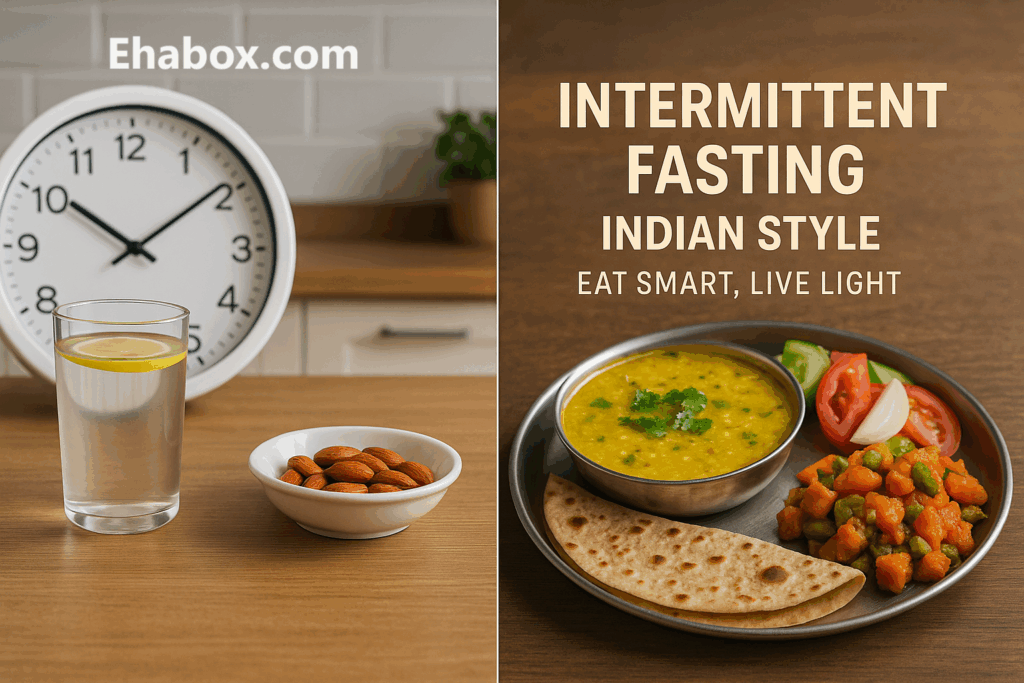
Intermittent fasting (IF) has become a global trend for weight loss, better metabolism, and improved overall health. But when it comes to adapting it to our Indian lifestyle and food habits, people often feel confused. The good news? You don’t need to ditch your beloved dal, sabzi, or chai! Intermittent fasting can be perfectly tailored to an Indian-style eating plan—and this article will guide you step by step.
What is Intermittent Fasting?
Intermittent fasting is not a diet—it’s an eating pattern that cycles between periods of eating and fasting. The most popular formats include:
- 16:8 Method – 16 hours fasting, 8 hours eating window
- 14:10 Method – 14 hours fasting, 10 hours eating window (ideal for beginners)
- 5:2 Method – 5 days of normal eating, 2 days of calorie restriction
In India, where food is a big part of our culture, the 16:8 intermittent fasting Indian plan is the most adaptable.
Why Intermittent Fasting Works (Especially for Indians)
Indian meals are often high in carbs—think roti, rice, potatoes, and sweets. IF helps by:
- Giving your digestive system rest
- Controlling blood sugar spikes
- Promoting fat burning
- Improving insulin sensitivity
- Helping with weight loss without giving up your favorite foods
Best Intermittent Fasting Schedule for Indian Lifestyle
Choose a window that suits your routine. Here are two common examples:
1. 16:8 Plan (Most Popular)
- Fasting: 8 PM to 12 PM (next day)
- Eating window: 12 PM to 8 PM
- 12 PM: Break fast with soaked nuts or fruit + coconut water
- 2 PM: Full lunch – dal, rice/roti, sabzi, curd
- 5 PM: Herbal tea + light snack (makhana, chana, or fruits)
- 7:30 PM: Early dinner – light khichdi, soup, or millet-based meal
2. 14:10 Plan (For Beginners)
- Fasting: 9 PM to 11 AM
- Eating Window: 11 AM to 9 PM
This is easier if you’re new to fasting or have a busy morning.
What to Eat While Intermittent Fasting in Indian Style
You don’t need to switch to Western foods! Stick to local, seasonal, and balanced Indian meals.
✅ Ideal Foods to Eat:
- Whole grains: Brown rice, millets (ragi, bajra, jowar), whole wheat
- Protein sources: Paneer, tofu, dal, sprouts, eggs, chicken, fish
- Healthy fats: Ghee, coconut oil, nuts, seeds
- Fiber-rich veggies: Lauki, spinach, carrot, beans, okra, beetroot
- Hydration: Buttermilk, herbal teas, lemon water, jeera water
❌ Avoid:
- Deep-fried snacks
- White sugar and maida products
- Sugary chai or coffee multiple times a day
- Processed food and colas
Common Mistakes to Avoid
- Overeating during the eating window – It’s not a license to binge!
- Skipping hydration – Drink enough water and herbal teas.
- Lack of nutrients – Make your meals wholesome with proteins, carbs, and fats.
- Breaking fast with heavy/oily food – Start light to support digestion.
Intermittent Fasting for Indian Women & Working Professionals
For Women:
- Use 14:10 or 12:12 methods, especially if dealing with hormonal issues.
- Ensure iron, calcium, and protein intake.
For Working Professionals:
- Plan your meals in advance.
- Break fast at lunch during your break.
- Keep healthy snacks handy: roasted chana, fruit, or boiled eggs.
Is Intermittent Fasting Safe in the Indian Context?
Yes—when done with proper planning and not extreme restriction. If you have diabetes, PCOS, thyroid issues, or are pregnant/lactating, consult your doctor first.
Final Thoughts: Can Indians Do Intermittent Fasting?
Absolutely! Whether you love your idli-sambar, poha, or dal-roti, intermittent fasting can be desi-fied to suit your palate and lifestyle. The key is consistency, mindful eating, and choosing the right window that works for your daily rhythm.