Have you ever felt unusually cranky, anxious, or low on energy—only to realize you skipped a meal or indulged in junk food? You’re not imagining things. Science now confirms what many of us intuitively feel: what we eat directly affects how we feel. This relationship, known as the gut-brain connection, is becoming a hot topic in nutrition and mental health.
In this article, we’ll break down the gut-brain connection, explore how your diet impacts your mood, and offer practical tips to eat your way to a healthier, happier mind.
What is the Gut-Brain Connection?
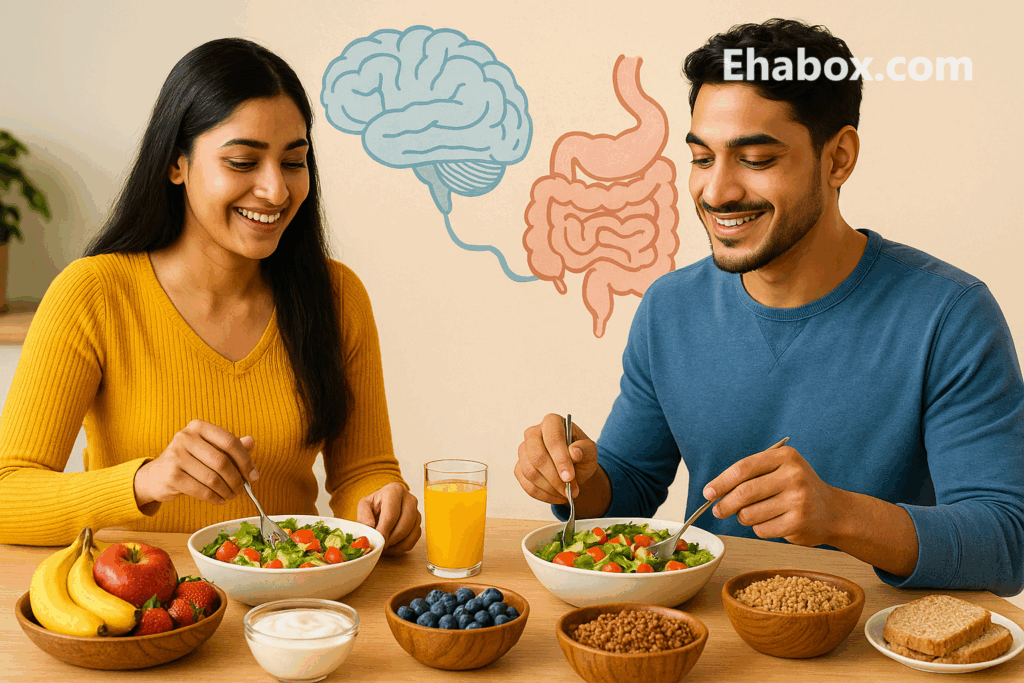
The gut-brain connection refers to the bidirectional communication between your gastrointestinal tract (gut) and your brain. This communication system is made possible by:
- The Vagus Nerve: A key messenger that sends signals both ways.
- Neurotransmitters: Like serotonin, 90% of which is produced in the gut.
- Gut Microbiome: Trillions of bacteria in your gut that influence brain chemistry.
Together, they form what scientists call the “gut-brain axis.”
How Food Affects Your Mood
1. Processed Foods = Mood Swings
Foods high in sugar, refined carbs, and unhealthy fats (like chips, soda, and pastries) spike your blood sugar—then crash it. This can lead to irritability, fatigue, and anxiety. These foods also inflame your gut, disrupting the microbiome.
Pro Tip: Replace processed snacks with nuts, seeds, or fruit.
2. Gut-Friendly Foods Boost Happiness
Fermented foods like curd, idli, dosa, kimchi, kefir, and kombucha support the growth of healthy gut bacteria. These good bacteria enhance serotonin production, helping regulate your mood, sleep, and appetite.
3. Omega-3s and Brain Function
Omega-3 fatty acids (found in walnuts, flaxseeds, and fatty fish like salmon or Indian mackerel) support brain cell function and reduce inflammation. Low omega-3 levels are linked to depression and cognitive decline.
4. Fiber Feeds Your Good Bacteria
Fiber-rich foods like whole grains, legumes, fruits, and vegetables act as prebiotics—nourishing the beneficial bacteria in your gut. A happy gut often means a calmer, more focused mind.
Mood-Boosting Foods to Add to Your Diet
| Food Category | Examples | Mood Benefit |
|---|---|---|
| Probiotics | Yogurt, buttermilk, idli, miso | Supports serotonin production |
| Prebiotics | Bananas, onions, garlic, oats | Feeds healthy gut bacteria |
| Omega-3s | Walnuts, flaxseeds, sardines | Reduces anxiety and depression |
| Whole Grains | Brown rice, quinoa, oats | Stabilizes blood sugar and energy |
| Leafy Greens | Spinach, methi, mustard greens | Rich in folate—linked to better mood |
| Dark Chocolate | 70%+ cocoa varieties | Triggers endorphins |
Poor Diet & Mental Health: What the Research Says
- A 2017 study published in BMC Medicine showed that people who followed a Mediterranean-style diet saw a significant reduction in depression symptoms.
- The SMILES Trial, one of the first to show that dietary improvements can treat depression, confirmed that food quality affects emotional well-being.
Diet Tips for Better Mental Health
- Eat Mindfully – Pay attention to how certain foods make you feel.
- Limit Sugar and Caffeine – These can lead to energy crashes and anxiety.
- Hydrate Well – Even mild dehydration can affect your concentration and mood.
- Balance Meals – Include proteins, healthy fats, and complex carbs in each meal.
- Keep a Food & Mood Journal – Track what you eat and how you feel daily.
Final Thoughts: You Are What You Eat—Emotionally Too
Your gut is more than just a digestion machine—it’s your “second brain.” And just like your brain, it needs proper care and nourishment. By adopting a gut-friendly, nutrient-rich diet, you can not only improve your physical health but also nurture your emotional well-being.
So next time you feel low, don’t just reach for your phone—reach for your fork.