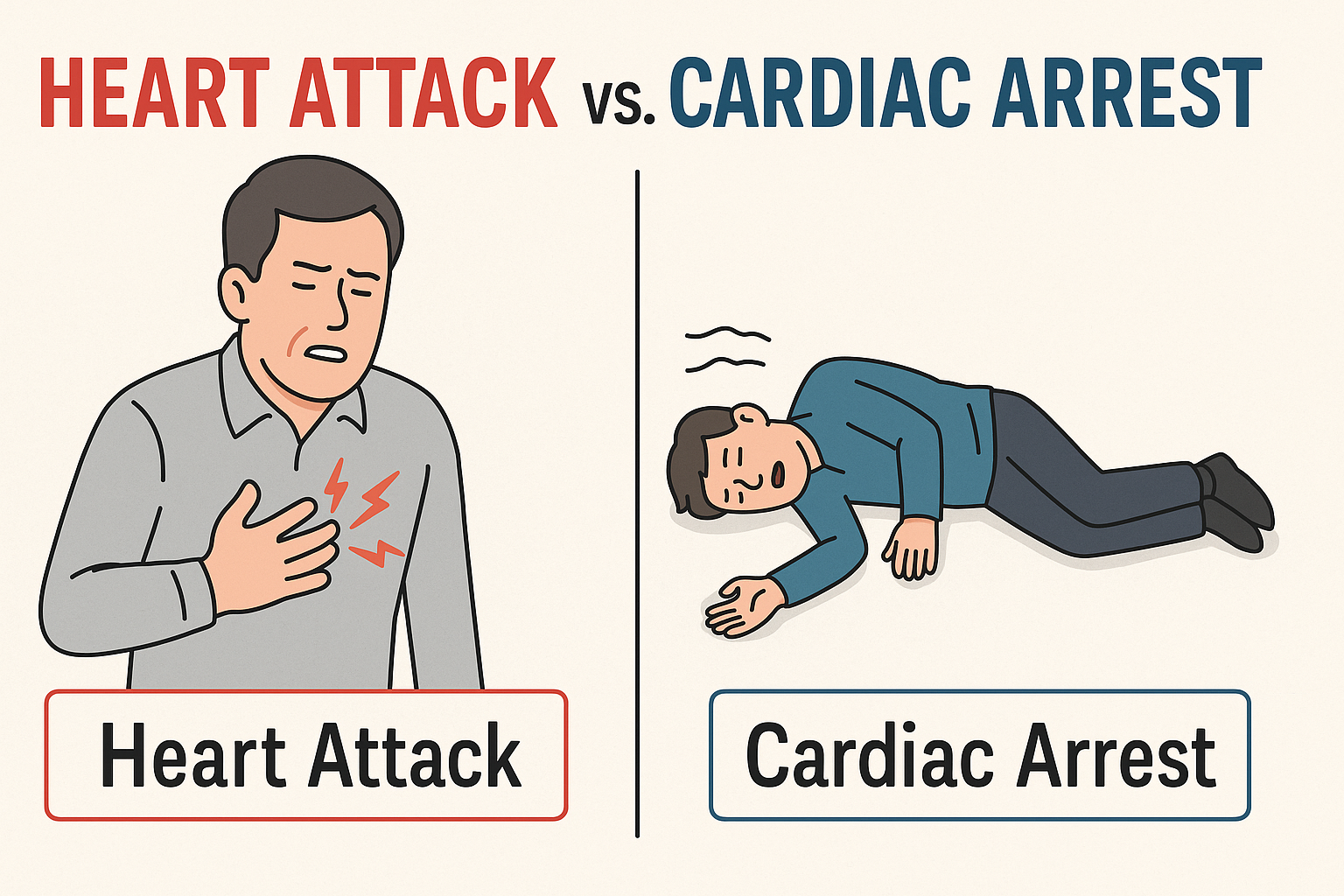
When someone suddenly collapses or clutches their chest in pain, we often hear people say, “It’s a heart attack!” or “He had a cardiac arrest!” But these two terms—heart attack and cardiac arrest—are not the same thing. While both are serious heart-related emergencies, understanding the difference could save a life.
In this article, we’ll break down the differences between heart attacks and cardiac arrests, what causes them, how to recognize the warning signs, and what to do in an emergency.
What is a Heart Attack?
A heart attack—also known as a myocardial infarction—occurs when blood flow to a part of the heart is blocked, usually by a blood clot or a buildup of plaque in the coronary arteries. This blockage prevents oxygen-rich blood from reaching the heart muscle, causing damage.
Common Causes of a Heart Attack:
- Coronary artery disease (CAD)
- High cholesterol levels
- Smoking
- Obesity
- High blood pressure
Symptoms of a Heart Attack:
- Chest pain or pressure (often described as squeezing or tightness)
- Pain radiating to the left arm, jaw, neck, or back
- Shortness of breath
- Nausea or vomiting
- Cold sweat
- Dizziness or lightheadedness
- Fatigue
📝 Note: Symptoms can be milder in women and may feel like indigestion, fatigue, or shortness of breath.
What is Cardiac Arrest?
A cardiac arrest is a sudden and complete stop of the heart’s electrical activity, leading to an immediate loss of heart function, breathing, and consciousness. Unlike a heart attack, where the heart is still beating, cardiac arrest means the heart has stopped.
It’s often caused by an electrical malfunction in the heart, such as ventricular fibrillation.
Common Causes of Cardiac Arrest:
- Arrhythmias (irregular heart rhythms)
- Heart attack (yes, a heart attack can trigger cardiac arrest)
- Heart failure
- Congenital heart conditions
- Severe electrolyte imbalance
- Drug overdose or trauma
Symptoms of Cardiac Arrest:
- Sudden collapse
- No pulse
- No breathing
- Loss of consciousness
🆘 Immediate action is crucial. Without CPR and defibrillation, death can occur within minutes.
Key Differences Between Heart Attack and Cardiac Arrest
| Feature | Heart Attack | Cardiac Arrest |
|---|---|---|
| Cause | Blocked blood flow to the heart | Electrical malfunction in the heart |
| Heart Beat | Usually continues | Stops suddenly |
| Consciousness | Usually conscious | Immediate loss of consciousness |
| Breathing | Often labored but present | Not breathing |
| Emergency Response | Get to hospital ASAP | Begin CPR and use AED immediately |
What to Do in an Emergency
If someone is having a heart attack:
- Call emergency services immediately.
- Keep the person calm and seated.
- Loosen tight clothing.
- If they’re not allergic and have no contraindications, give aspirin (300 mg).
- Do not offer food or water.
If someone goes into cardiac arrest:
- Call for emergency help.
- Start CPR immediately: 30 chest compressions followed by 2 rescue breaths.
- Use an AED (Automated External Defibrillator) if available.
- Continue CPR until professional help arrives.
💡 Every minute without CPR decreases survival by 10%. Your quick response matters.
Can a Heart Attack Cause Cardiac Arrest?
Yes, a heart attack can lead to cardiac arrest, especially if the damaged heart muscle causes an electrical disturbance. This is why timely treatment during a heart attack is vital—it not only saves heart muscle but also prevents complications like cardiac arrest.
How to Reduce Your Risk
- Eat a heart-healthy diet rich in fruits, vegetables, lean protein, and whole grains.
- Exercise regularly—at least 30 minutes a day, 5 days a week.
- Avoid smoking and excessive alcohol.
- Get regular health checkups and manage blood pressure, cholesterol, and diabetes.
- Reduce stress with activities like yoga, walking, or meditation.
Final Thoughts
Understanding the difference between a heart attack and cardiac arrest is more than just medical jargon—it’s knowledge that could save a life. A heart attack is a “circulation” problem, while cardiac arrest is an “electrical” one. But in both cases, acting quickly and getting medical help is critical.
Whether you’re at home, at work, or in public, knowing the signs and what to do can be the difference between life and death.
👉 Stay informed. Stay heart smart. Save a life.