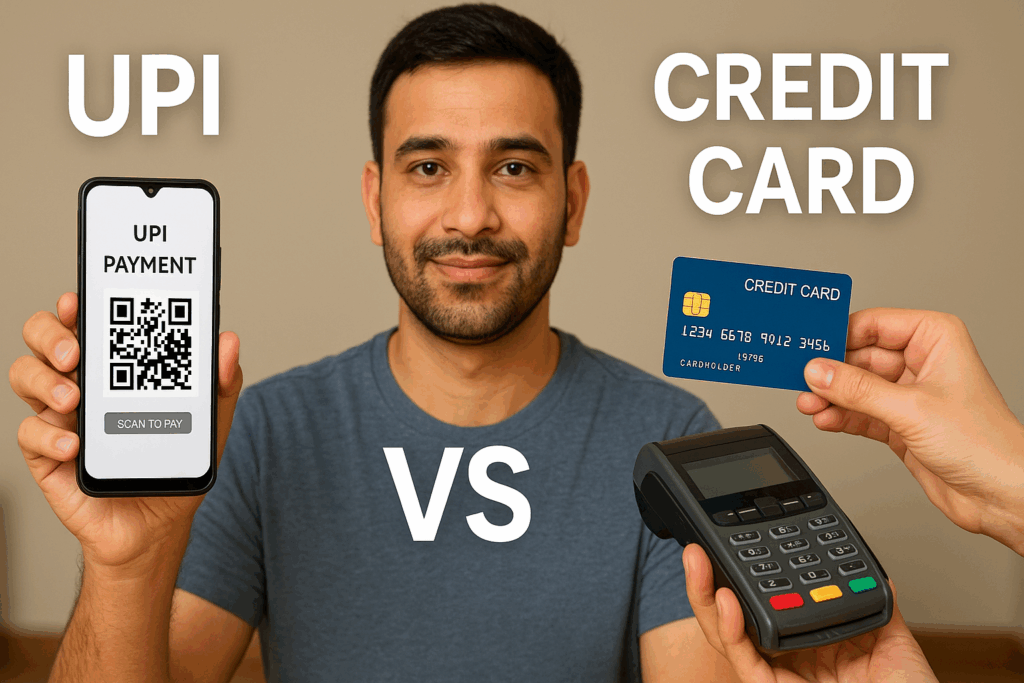
In today’s digital India, making payments is easier than ever. But with multiple payment methods like UPI and credit cards available at your fingertips, the question arises: Which is better for daily use—UPI or credit card?
If you’re someone who frequently shops online, dines out, or pays utility bills through apps, this article will help you decide which payment mode suits your lifestyle and budget best. Let’s break it down.
What is UPI?
Unified Payments Interface (UPI) is a real-time payment system developed by the National Payments Corporation of India (NPCI). It allows users to link multiple bank accounts in a single mobile app and transfer money instantly—24/7.
✅ Popular UPI Apps: Google Pay, PhonePe, Paytm, BHIM
✅ Transaction Limit: Generally ₹1 lakh per day (varies by bank)
What is a Credit Card?
A credit card is a financial tool issued by banks or NBFCs that lets you borrow money up to a certain limit for purchases. You pay later, either in full or in EMIs (Equated Monthly Installments), typically with an interest-free grace period of up to 45 days.
✅ Top Providers: HDFC Bank, SBI, Axis Bank, ICICI
✅ Perks: Cashback, reward points, lounge access, EMI options
UPI vs Credit Card: Daily Use Comparison
| Feature | UPI | Credit Card |
|---|---|---|
| Speed | Instant payments | Slight delay (especially online) |
| Ease of Use | Extremely simple (scan & pay) | Requires OTP, CVV, or swipe |
| Transaction Fee | Usually zero | Some merchants charge extra |
| Security | PIN-based, linked to bank | OTP, 3D secure, EMV chip protection |
| Rewards & Offers | Limited cashback offers | Reward points, discounts, travel perks |
| Debt Involvement | Direct debit from account | Borrowed money (debt involved) |
| EMI Option | Not available | Available for big purchases |
| Usage in Rural Areas | Widely accepted | Limited acceptance |
Pros and Cons of Using UPI for Daily Transactions
✅ Pros
- No extra charges
- Quick and contactless
- Works even with small amounts
- No debt or interest to worry about
❌ Cons
- Limited rewards and offers
- Daily transaction cap
- Dependent on internet and server uptime
Pros and Cons of Using Credit Cards for Daily Transactions
✅ Pros
- Great for big-ticket items
- Earn cashback, miles, and discounts
- EMI options help manage larger expenses
- Builds credit score with regular use
❌ Cons
- Risk of overspending
- Interest charges if not repaid on time
- Hidden fees and annual charges
Which One Should You Use Daily?
Use UPI if:
- You want a zero-cost, fast, and hassle-free way to pay.
- You usually pay for small, everyday items like groceries, snacks, rides, and mobile recharges.
- You want to avoid debt and track real-time spending.
Use Credit Card if:
- You’re making larger purchases or want to convert payments into EMIs.
- You’re disciplined and pay bills on time to avoid interest.
- You want to earn rewards, cashback, or enjoy travel and lifestyle benefits.
Pro Tip: Use Both Smartly!
Combine the best of both worlds:
- Use UPI for small, day-to-day transactions.
- Use your credit card for online shopping, travel, and offers—but pay bills on time to avoid interest.
Conclusion
Both UPI and credit cards have their unique strengths. For daily use, UPI is ideal for simplicity and zero-cost transactions. However, credit cards are powerful if used wisely, especially when you want rewards and flexibility.
Always choose based on your financial habits, spending patterns, and repayment discipline. And remember, convenience should never come at the cost of financial health.